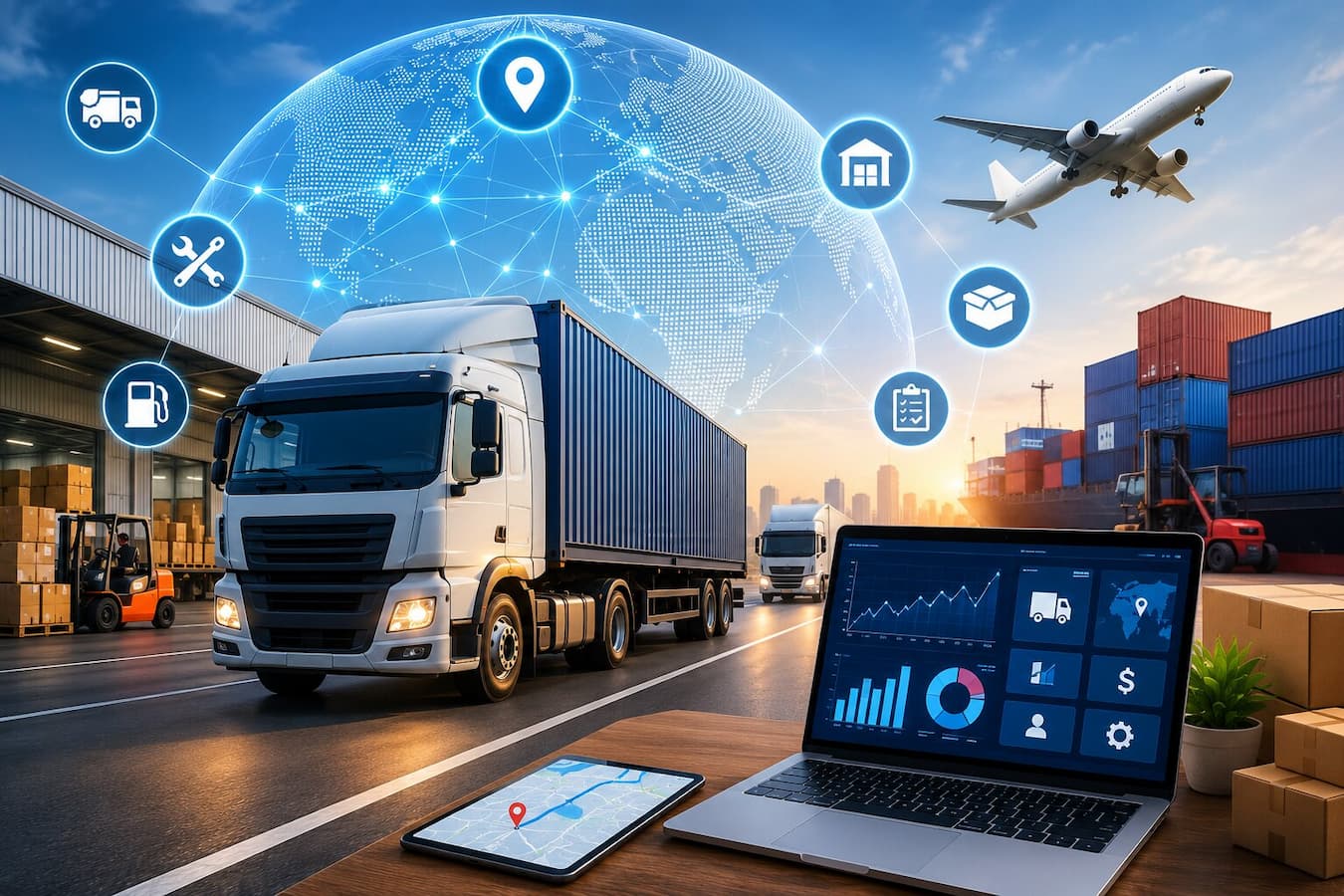
Global supply networks no longer operate on predictable, linear schedules. Between shifting tariff regimes, regionalized sourcing strategies, port congestion, and rising customer expectations for same-day fulfillment, logistics leaders can no longer afford to run mission-critical operations on disconnected spreadsheets and rigid on-premise servers.
To keep pace with real-time volatility, operations directors are increasingly partnering with specialized engineering teams like Intobi to modernize their logistics infrastructure and migrate core workflows into scalable cloud environments.
What began a decade ago as an IT cost-cutting initiative has matured into a fundamental operational necessity: without cloud-native architecture, supply chain teams simply cannot achieve the end-to-end visibility, automation, and speed required to compete in 2026 and beyond.
The Breaking Point of Legacy On-Premise Systems
For decades, enterprise resource planning (ERP), warehouse management systems (WMS), and transportation management systems (TMS) lived inside company-owned server rooms. While those monolithic setups served stable, slow-moving distribution models well enough in the past, they struggle severely under modern logistics pressures.
The numbers reflect how rapidly the industry is leaving legacy hardware behind. According to late-2026 market analysis from Fortune Business Insights, the global cloud logistics market reached approximately $28.45 billion in 2026 – up from $24.93 billion in 2025 – and is projected to expand at a 14.1% compound annual growth rate (CAGR) through 2034. This sustained capital shift is driven by four structural failures inherent to on-premise software:
- Data Latency and Siloed Truth: When warehouse inventory updates run on overnight batch jobs and carrier statuses live in separate email threads, planners are always making decisions based on yesterday’s reality. By the time a stockout or port delay surfaces in a legacy ERP, the window to reroute freight cheaply has already closed.
- Rigid Peak-Season Capacity: Retail, e-commerce, and agricultural supply chains experience massive seasonal spikes. On-premise infrastructure forces IT teams to over-purchase expensive server hardware just to survive Q4 holiday volume – leaving that capacity sitting idle for the other ten months of the year.
- Brittle Partner Integrations: Modern fulfillment relies on dozens of external 3PLs, customs brokers, freight forwarders, and last-mile couriers. Connecting those partners to an aging on-premise database requires custom EDI mapping and fragile point-to-point scripts that break whenever a partner updates their system.
- Mounting Maintenance Debt: Patching security vulnerabilities, managing server uptime, and executing painful multi-month version upgrades drain IT budgets that should be funding operational innovation.
What Modern Cloud Logistics Actually Unlocks
Moving to the cloud is not simply about hosting the same clunky software on someone else’s servers. When logistics leaders evaluate what cloud logistics software does at an architectural level, the real value lies in unifying fragmented operational data into a single, continuously updated ecosystem.
Cloud-native supply chain platforms transform daily execution across five core areas:
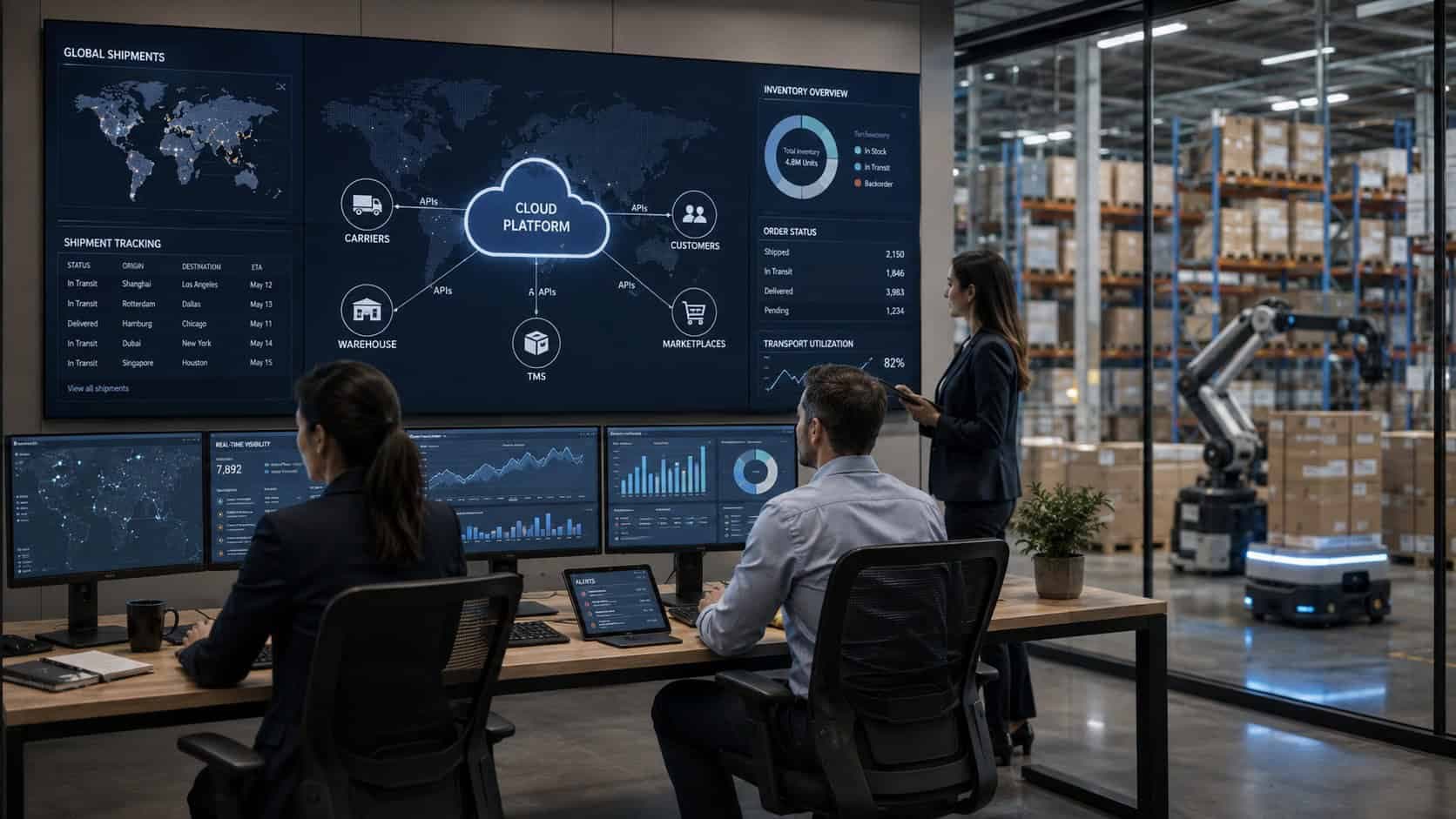
- End-to-End Real-Time Visibility: Cloud control towers ingest live telemetry from GPS trackers, warehouse barcode scanners, IoT cold-chain sensors, and carrier APIs simultaneously. Dispatchers and procurement managers see exact shipment locations, dwell times, and inventory levels across every node in the network from a single browser dashboard.
- Elastic Scalability: Cloud infrastructure automatically scales compute and storage resources up during Black Friday surges, product launches, or sudden supply disruptions – and scales right back down when volume normalizes. Teams pay only for what they actually use.
- Frictionless API Ecosystems: Rather than spending months building custom EDI bridges, cloud platforms connect to carriers, customs authorities (such as U.S. CBP’s Automated Commercial Environment), e-commerce storefronts, and ERP financial modules through standardized REST APIs and webhooks.
- AI, Digital Twins, and Predictive Planning: In its June 2026 Top Supply Chain Technology Trends report, Gartner highlighted Agentic AI, Physical AI (combining AI models with IoT sensors and warehouse robotics), and Intelligent Simulation (digital twins) as the defining forces reshaping logistics. None of these capabilities can run effectively on isolated on-premise servers; they require the elastic compute power and unified data lakes that only cloud platforms provide.
- Automated Compliance and Provenance: With stricter global regulations – from Europe’s Corporate Sustainability Reporting Directive (CSRD) to pharmaceutical serialization and food-safety traceability – cloud platforms automate audit trails, capturing lot-level provenance from raw material sourcing to final doorstep delivery.

Public, Private, or Hybrid? Choosing the Right Cloud Model
Not every supply chain team migrates to the exact same cloud architecture. In 2026, deployment choices generally split across three models depending on regulatory exposure and legacy footprint:
- Public Cloud (SaaS): Accounting for more than 55% of global cloud supply chain revenue, multi-tenant public cloud platforms offer the fastest time-to-value, lowest upfront cost, and effortless automatic updates. They are the default choice for growing mid-market distributors, e-commerce brands, and multi-site 3PLs.
- Hybrid Cloud: Rapidly growing among large manufacturers and global enterprises, hybrid architectures keep sensitive, compliance-heavy, or ultra-low-latency factory floor workloads on local edge servers while pushing demand planning, freight visibility, and supplier portals to the public cloud.
- Private Cloud: Primarily utilized by heavily regulated sectors – such as defense contractors, aerospace, and specialized healthcare logistics – where strict data-sovereignty laws or proprietary algorithms require dedicated, single-tenant infrastructure.
Looking Ahead: The Shift Toward Autonomous Supply Chains
Migrating supply chain operations to the cloud is ultimately about building a foundation for what comes next. Over the next several years, industry analysts expect a growing share of routine logistics decisions – from dynamic safety-stock rebalancing and carrier tender selection to automated exception rerouting – to be executed autonomously by AI agents operating within human-defined guardrails.
Organizations still tethered to aging on-premise servers will find themselves locked out of that shift, burning capital just to keep legacy hardware running. By moving thoughtfully to a clean, API-driven cloud architecture today, supply chain teams gain immediate visibility and cost control while positioning their operations to adapt effortlessly to whatever disruptions tomorrow’s market brings.

Flexibility, efficiency, and individual approach to each customer are the basic principles we are guided by in our work.
Our services