We often meet founders who have a clear idea for an app and one big question right behind it: who do I need to hire to actually build this? It is a fair question, and getting the answer wrong is expensive. In our experience, most apps do not fail because the code was bad. They fail because the team was missing a role nobody realised was important until it was too late.
If you already know roughly how the work unfolds, and if not, our guide to the 5 phases of the mobile app development lifecycle is a good place to start, the natural next question is who handles each of those phases.
TL;DR: A healthy app team is usually five to nine people. The five non-negotiable roles are a project manager, a business analyst, a UI/UX designer, mobile developers, and a QA engineer. Add specialists like a DevOps engineer or security expert as your app grows. The roles you are most tempted to cut, QA and project management, are usually the ones that cost you the most when they are missing.
Let us walk through the people behind a successful app, what each one actually does, and which roles you genuinely need versus which are nice to have.
Why team structure matters more than you think
The stakes are higher than most first-time founders expect. According to Statista (statista.com), consumers are projected to download well over 250 billion mobile apps a year, which means your product is not launching into an empty market. It is competing for attention against millions of others, and users delete anything that feels slow, confusing, or buggy within seconds.
That is a team problem before it is a technology problem.
Most apps do not fail because developers cannot write code. They fail because the wrong thing gets built by the wrong team. When roles overlap or go missing, decisions stall and development slows to a crawl.
The 5 core roles every app project needs
You do not need a huge team to build a good app. The mandatory members are surprisingly consistent across almost every project. Here is who they are and why they matter.
1. Project manager
What they do: Keep everything moving. They organise the workflow, run communication between you and the team, track progress, and make sure deadlines do not quietly slip until they suddenly explode a week before launch.
Why you cannot skip them: It is tempting to coordinate the developers yourself. We strongly advise against it. Even an excellent group of developers cannot fix poor coordination, and the time you spend chasing updates is time you are not spending running your business.
2. Business analyst
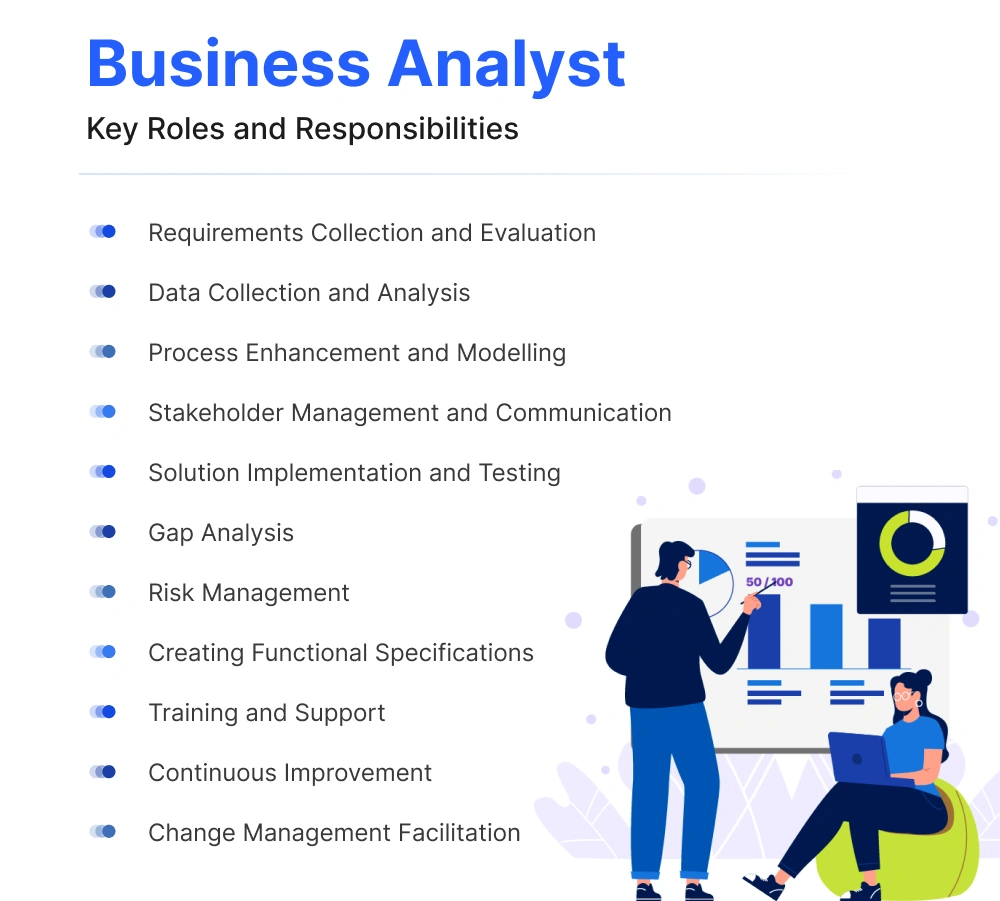
What they do: Sit between your business goals and the technical team. Early on, they turn a rough idea into clear, complete requirements: what the app must do, for whom, and why.
Why they matter: This role quietly saves you money. Most expensive rework happens because requirements were vague, so developers filled in the gaps and guessed wrong. A good business analyst reduces that guessing, prevents scope creep, and keeps the build aligned with what your business actually needs.
3. UI/UX designer
What they do: Own how the app looks and, more importantly, how it feels to use. UX (user experience) is the structure and flow. UI (user interface) is the visual layer: the colours, buttons, and screens.
Why it is not just decoration: A confusing or ugly app gets deleted fast, no matter how clever the engineering underneath. On mobile, where people decide in seconds whether your app is worth their time, design is a business investment, not a finishing touch.
4. Mobile developers
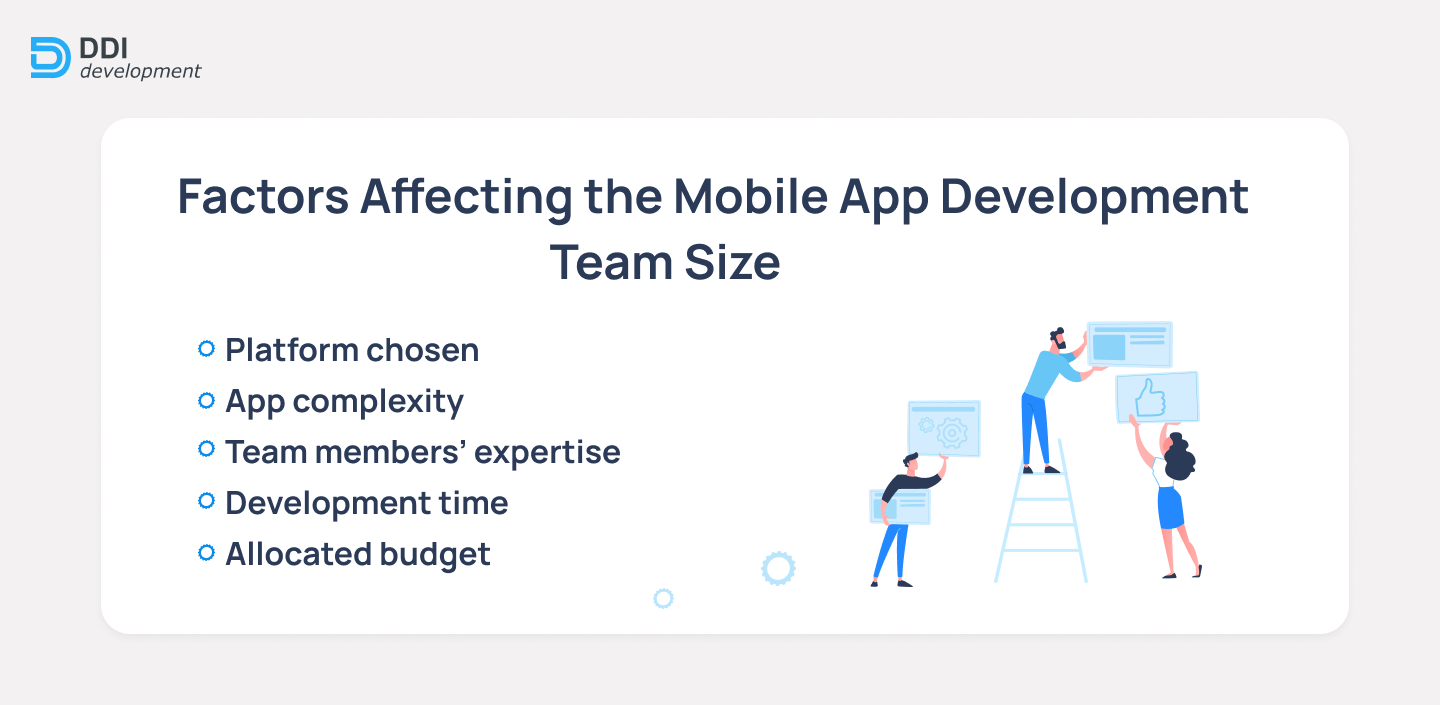
What they do: Write the code that makes your app work. The key decision here shapes the whole team. A native app typically needs separate developers for iOS and Android. A cross-platform approach lets one team build for both from a single codebase, which usually means a smaller team and a lower cost.
Do not forget the back end: For more complex products, you will also want backend developers, who build the server-side logic, databases, and the parts of the app users never see but rely on completely.
5. QA engineer
What they do: Test the app against its requirements, hunt for bugs, and make sure everything works before real users ever see it. QA stands for quality assurance.
Why you must not cut this: This is the role founders most often try to drop to save money, and it is almost always a false economy. Releasing an app without proper testing is how you end up with one-star reviews and users who never come back.
The roles you might add as you grow
The five above cover most projects. Depending on your app’s complexity and ambition, you may also bring in:
A product manager, if you cannot be hands-on day to day and need someone to own the product vision.
A software architect, for large, complex systems that must handle heavy loads and scale reliably.
A DevOps engineer, who handles deployment, monitoring, and the infrastructure that keeps your app running after launch.
A security specialist, especially if your app handles sensitive data, payments, or must meet compliance requirements.
You rarely need all of these on day one. The smart approach is to start with the core team and add specialists as the product, and the risks, grow.
In-house, freelance, or outsourced?
Once you know which roles you need, the next question is where the people come from. There are three common routes.
Hiring in-house gives you maximum control and a fully dedicated team, but it is the slowest and most expensive to assemble. You are recruiting, onboarding, and paying salaries plus overheads for every role. If you want a realistic picture of current rates and available talent before you commit, browsing live tech jobs listings for roles like mobile developer, QA engineer, and UX designer is a quick way to see salaries and required skills.
Hiring freelancers is flexible and cost-effective for specific, well-defined tasks. The trade-off is coordination: you become the glue holding separate individuals together, which effectively makes you the project manager whether you wanted the job or not.
Outsourcing to a development company gives you a ready-made team with every role already in place and a project manager who owns the coordination. For most founders who want to move quickly without building a permanent department, this is the option that balances speed, cost, and quality, which is exactly why so many businesses choose it for their first product.
The takeaway
Building an app is a team effort, and the team is as important as the idea. Get the core five right, and you have the foundation for a product that ships on time and actually works. Try to save money by cutting one of them, and you usually pay for it later in delays, rewrites, and a blown budget.